Communication Barriers In Nursing
Clear communication is one of the most important skills in nursing — and one of the easiest things to lose under pressure. When it breaks down, the results are measurable: medication errors, delayed treatment, and lower patient satisfaction. Communication failures are so consequential that, by figures associated with The Joint Commission, they are involved in up to 80% of serious medical errors, many occurring during handoffs between staff.
The encouraging part is that nearly every communication barrier in nursing has a known, practical fix. This guide breaks down the main barriers, the nurse-specific skills that overcome them — including therapeutic communication and the SBAR handoff framework — and the strategies that lead to safer, more connected care.
What Are Communication Barriers in Nursing?
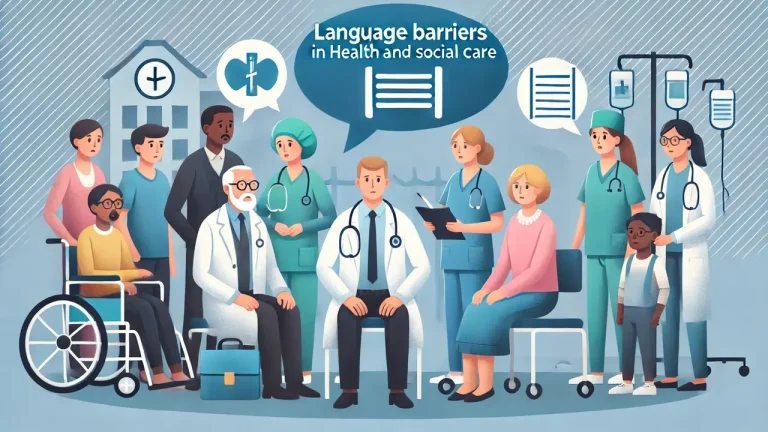
Communication barriers in nursing are obstacles that prevent the clear exchange of information between nurses, patients, families, and other members of the care team. They matter because nursing communication isn’t just conversation — it’s how assessments, treatment plans, and safety concerns move through a care setting. When a barrier interferes, information is lost, and patient safety and satisfaction suffer.
These barriers rarely come from a single source. The clearest way to understand them is by where they originate: the nurse, the patient, the environment, or the organization.
The Main Types of Communication Barriers
Nurse-Related Barriers
Some barriers originate with the nurse, often through no fault of their own. Reliance on medical jargon without checking the patient’s comprehension level is a frequent one — words that are routine to clinicians can be confusing or frightening to patients. Limited cultural competence can lead to misreading a patient’s background or preferences, and emotional strain or burnout can blunt empathy and focus. Inexperience can also make it harder to translate complex information into plain language.
Patient-Related Barriers

Patients bring their own barriers. Language differences can cause critical information to be misinterpreted. Cognitive impairments may make it hard for a patient to articulate needs or follow instructions. Emotional states such as anxiety, fear, and pain strongly affect a person’s ability to engage — and cultural background shapes how patients express discomfort or describe symptoms in the first place. Previous negative experiences with healthcare can also color how a patient receives information, making rapport and trust essential.
Environmental Barriers
The setting itself can disrupt communication. Noise and constant interruptions break concentration during assessments and patient education. A lack of privacy discourages patients from raising sensitive issues. Even facility layout — crowded waiting areas, poorly designed wards — can limit the direct, focused interaction good care depends on.
Organizational Barriers
System-level factors quietly shape every interaction. Steep hierarchies can discourage staff from speaking up. Thin or absent communication-skills training leaves nurses underprepared for diverse patient needs. And high patient-to-nurse ratios simply leave too little time for meaningful conversation — one of the most pervasive barriers of all, because it compounds every other one.
Therapeutic Communication: The Nurse’s Core Skill
Beyond avoiding barriers, nursing has its own positive communication discipline: therapeutic communication. It means making the patient’s needs the priority, creating a setting where they feel safe, and actively involving them in their own care. Research consistently links strong therapeutic communication to higher patient satisfaction and better treatment outcomes.
The core techniques are learnable and worth practicing deliberately:
- Active listening — giving full attention, without interrupting or rushing to the next task.
- Open-ended questions — “Tell me how the pain has changed” invites more than a yes/no answer.
- Therapeutic silence — pauses that give patients room to gather their thoughts.
- Reassurance and appropriate touch — non-verbal signals that convey presence and care.
- Teach-back — asking the patient to restate the plan in their own words to confirm understanding.
These skills are the everyday counterweight to the barriers above — and they’re exactly what burnout tends to erode first.

SBAR and Safe Nurse-to-Nurse Handoffs
The riskiest moments in nursing communication aren’t always with patients — they’re the handoffs between staff, at shift change or when transferring care. Critical details slip through precisely here, which is why structured handoff tools exist.
SBAR — Situation, Background, Assessment, Recommendation — is a structured format recommended by The Joint Commission for clinical communication between staff. Instead of a vague “I’m a little worried about the patient in bed 4,” a nurse using SBAR states the situation (oxygen saturation has dropped to 88%), the background (admitted with pneumonia two days ago), the assessment (she appears to be deteriorating), and the recommendation (she needs reassessment now). The format gives the recipient exactly what they need to act — and just as importantly, it lowers the hesitation that hierarchy creates, making it easier for any nurse to escalate a concern.
Other structured tools like I-PASS standardize shift handovers and have been shown to substantially reduce errors without adding time. The underlying principle is the same: when the format is predictable, less gets lost. The most dangerous handoff failure is silence — a nurse who notices something wrong but doesn’t speak up. Structured tools and clear escalation pathways exist to make sure that voice is always heard.
How Burnout and Heavy Workloads Erode Communication
Burnout and excessive workload deserve special attention, because they undermine communication from the inside out. Chronic fatigue and emotional exhaustion lead to emotional detachment — less empathy, which makes patients hesitant to share vital information. They impair active listening and concentration, so patients feel overlooked and treatment details get missed. They reduce information retention through cognitive overload, raising the risk of omissions. And they flatten non-verbal communication, removing the facial expressions and body language patients rely on to feel cared for.
Heavy workloads compound all of this over time. High patient-to-nurse ratios leave too little time for meaningful interaction, rushed conversations breed misunderstanding, and the resulting strain drives turnover — which disrupts the continuity of relationships that good communication depends on. These are systemic problems, and they need systemic responses: manageable workloads, real support systems, and a culture that treats nurse wellbeing as a patient-safety issue, because it is one.

Strategies to Overcome Communication Barriers
Training and Education
Ongoing development is the foundation. Workshops in active listening, empathy, cultural competence, and non-verbal communication build skill, while role-playing and simulation let nurses rehearse difficult interactions in a safe setting. Regular assessment of communication skills keeps the improvement going rather than treating it as a one-time box to check.
Structured Communication Protocols
Adopt SBAR and I-PASS as standard policy, not optional best practice, and protect dedicated, interruption-free handover time. Establish clear escalation pathways any staff member can use without fear of reprisal, and track communication-related near-misses so systemic patterns become visible.
Technology — Used Carefully
Translation apps bridge language gaps in the moment, electronic health records standardize terminology, and telehealth extends reach. Multimedia patient-education tools present information in more accessible formats. The caution is the same as everywhere in healthcare: technology should support human connection, not replace it, and EHR systems should be audited for whether they’re creating clarity or friction.
Cultural and Emotional Sensitivity
Check language needs at the start of every new patient encounter, build rapport before diving into clinical detail, and create a calm, supportive atmosphere that lowers patient anxiety. Small relational habits do much of the heavy lifting.
Barriers and Solutions at a Glance
| Barrier | Impact on care | Proven fix |
|---|---|---|
| Medical jargon | Patient confusion, non-compliance | Plain language; teach-back |
| Language differences | Misread instructions | Interpreters; translation tools |
| Anxiety, fear, pain | Patient can’t engage | Rapport; therapeutic communication |
| Noise / no privacy | Disrupted, guarded conversations | Quiet, private settings |
| Hierarchy | Concerns go unvoiced | SBAR; clear escalation pathways |
| Burnout / high ratios | Detachment, missed details | Manageable workloads; support systems |
| Risky handoffs | Critical details lost | SBAR and I-PASS as standard policy |
Frequently Asked Questions
What are the main communication barriers in nursing?
The main barriers are nurse-related (jargon, burnout, limited cultural competence), patient-related (language, cognitive impairment, anxiety, pain), environmental (noise, lack of privacy), and organizational (hierarchy, inadequate training, high patient-to-nurse ratios). Each can compromise patient safety and satisfaction.
What is SBAR in nursing?
SBAR stands for Situation, Background, Assessment, and Recommendation. It’s a structured communication format recommended by The Joint Commission that helps nurses share critical information clearly and quickly, especially during handovers and when escalating a concern.
What is therapeutic communication in nursing?
Therapeutic communication is a nursing approach that prioritizes the patient’s needs and involves them in their care, using techniques like active listening, open-ended questions, therapeutic silence, and teach-back. It’s strongly linked to higher patient satisfaction and better outcomes.
How does nurse burnout affect communication?
Burnout causes emotional detachment, impaired active listening, reduced information retention, and weaker non-verbal cues. Together these make patients feel overlooked and raise the risk of miscommunication about treatment plans and patient needs.
How can nurses overcome communication barriers?
Nurses can use plain language and teach-back, build rapport, adopt structured tools like SBAR for handoffs, request interpreters when needed, and create calm, private settings. At the system level, manageable workloads and communication training make these habits sustainable.
Conclusion
Communication barriers in nursing are common, but they are not inevitable. Whether a barrier originates with the nurse, the patient, the environment, or the organization, there is a matching strategy to reduce it — from plain language and therapeutic communication at the bedside to SBAR handoffs and manageable workloads at the system level. Investing in these skills and structures does more than prevent errors. It builds the trust that lets patients feel heard, and that trust is where better care begins.